Mahāvīra · Janma Kalyāṇaka · Caitra's thirteenth bright tithi
What is Mahāvīra Janma Kalyāṇaka?
Mahāvīra Janma Kalyāṇaka, also called Mahāvīra Jayantī, commemorates the birth of Mahāvīra, the twenty-fourth Tīrthaṅkara of the present time cycle in Jain tradition. Jain communities honor his path of ahiṃsā, truth, self-discipline, and non-possession.
An auspicious event in a Tīrthaṅkara's life
Janma Kalyāṇaka means the auspicious event of birth.
Jain tradition remembers five kalyāṇakas in a Tīrthaṅkara's life: conception, birth, renunciation, perfect knowledge, and liberation. Mahāvīra's Janma Kalyāṇaka is the birth event.
Practices vary among Jain communities. Participation may include temple gatherings, worship, processions, teachings, meditation, charity, and service. Some communities center image-based rites; others emphasize study, prayer, and ethical practice.
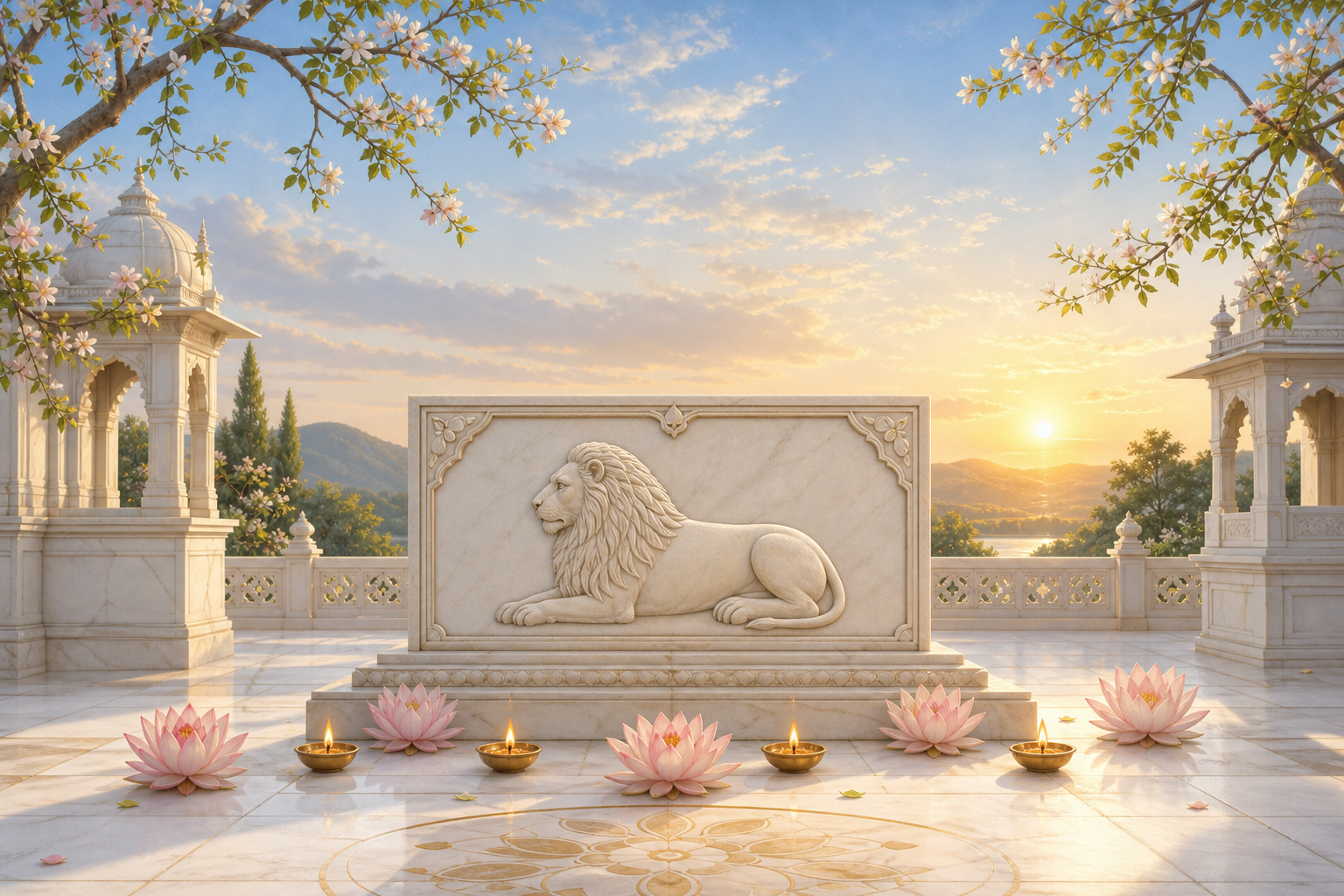
A symbolic illustration
The lion is Mahāvīra's traditional lāñchana.
A lāñchana is an identifying emblem associated with a Tīrthaṅkara.
The calendar date
Mahāvīra Janma Kalyāṇaka falls on Caitra Śukla Trayodaśī.
Why it appears
The report checks for Caitra Śukla Trayodaśī at local sunrise.
The rule identifies Mahāvīra Janma Kalyāṇaka when Śukla Trayodaśī is underway at sūryodaya, local sunrise, during the regular lunar month Caitra in the named amānta calendar method.
Jain calendars and community authorities apply their own calendrical conventions and precedence rules. Open Pañcāṅga presents this as an introductory Indian reference.
References: The Kalpa Sūtra, public-domain translation · Prime Minister of India, the five kalyāṇakas · President of India, Mahāvīra's principles