Makara Saṅkrānti · solar calendar · harvest season
What is Makara Saṅkrānti?
Makara Saṅkrānti is the annual solar-calendar occasion associated with the Sun's entry into Makara, the sidereal sign called Capricorn in English. Many communities connect this time with harvest, gratitude, sharing, and the turning of the season.
See the saṅkrāntis in actionWatch Makara become one crossing in the Sun’s twelve-part year.→
The calendar name
Makara names the sign; saṅkrānti names the crossing.
The sidereal rāśi called Capricorn in English.
Put together, the name describes a precise solar-calendar condition rather than a tithi or Moon phase.
How Open Pañcāṅga finds the date
Makara Saṅkrānti appears on the local date when the Sun enters Makara.
Open Pañcāṅga calculates the Sun's position using the Lahiri (Citrāpakṣa) ayanāṃśa described on this site. When the Sun reaches the beginning of Makara, it shows Makara Saṅkrānti instead of also showing a general saṅkrānti result.
The result includes the calculated local time and the ayanāṃśa used. Another calendar may use a different ayanāṃśa or a different way of choosing the civil date, especially when the crossing falls close to midnight.
One season, many living traditions
Regional festivals retain their own names and meanings.
Government of India sources mention Makara Saṅkrānti together with regional celebrations including Uttarāyaṇa, Pongal, Māgha Bihu, Lohri, Kanuma, and Tusu Parab. These celebrations meet in a broad harvest-season setting, but they have their own histories, foods, rituals, local calendars, and sometimes multi-day spans.
Open Pañcāṅga uses the Sun's entry into Makara to identify Makara Saṅkrānti while preserving each regional celebration under its own name.
Science first
Enjoy the solar trail without staring at the Sun.
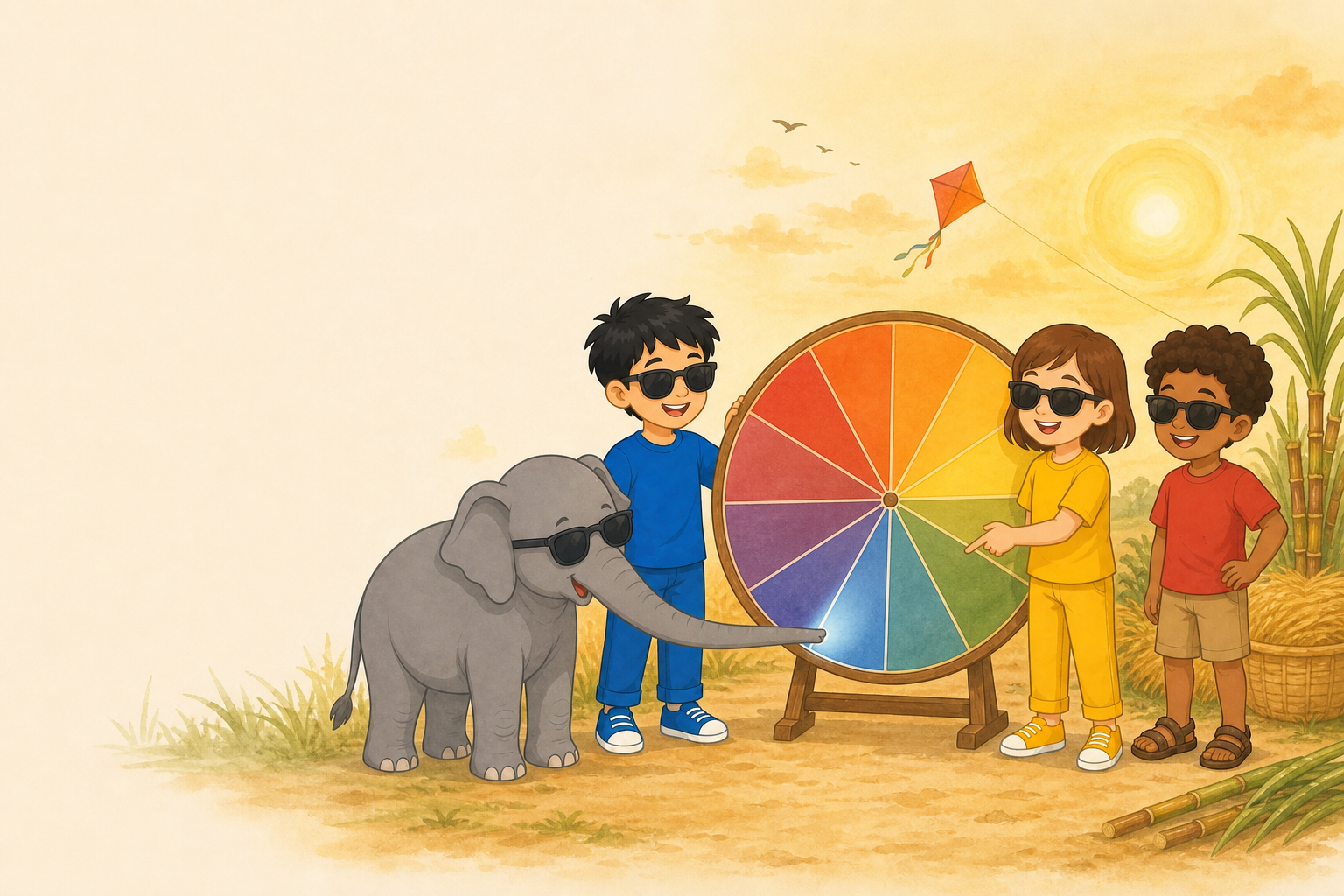
Our explorers wear sunglasses because it is a bright day—not because sunglasses make direct solar viewing safe. They are studying a diagram and keeping the Sun behind them. Ordinary sunglasses are never adequate protection for looking at the Sun.
Open official references
The astronomy and the cultural context come from different evidence layers.
The live calculation uses NASA/JPL Horizons for the Sun's position. The calendar definition and festival explanation use reviewed open Government of India sources. The user-facing explanation is independently written.
References: Maharashtra Tourism, Makara Saṅkrānti · Guntur District Administration, Saṅkrānti · Press Information Bureau, regional January festivals · Supreme Court of India, Calendar 2026